
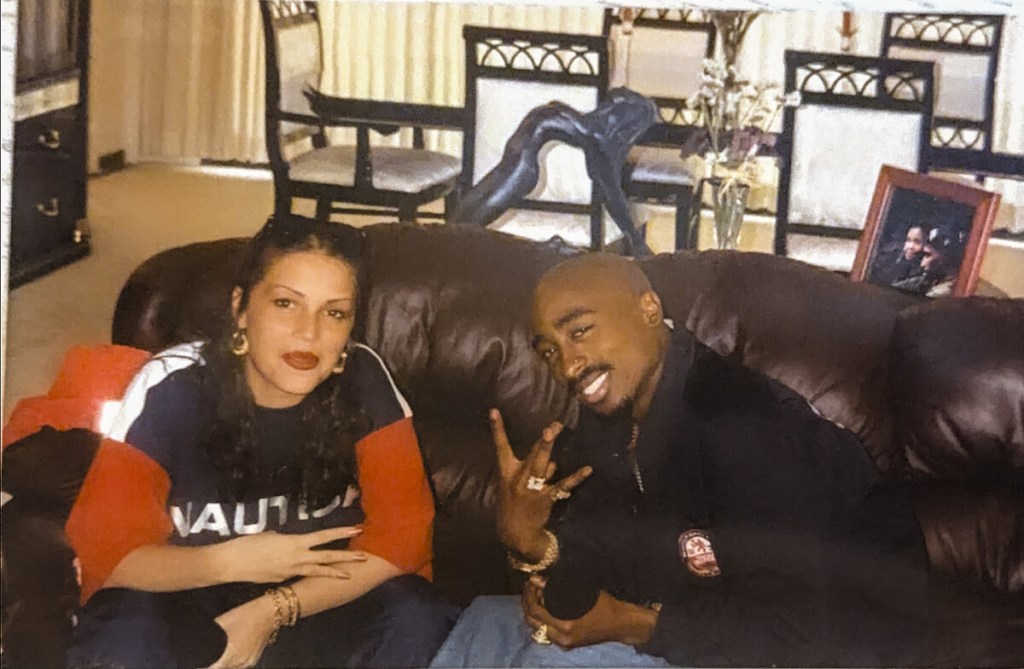
Photo: Netflix Tudum / The Tupac Tapes with Angie Martinez.
Thirty years after Tupac Shakur’s death, one of the most consequential decisions in hip-hop radio is back in the spotlight. Angie Martinez has opened her archive for The Tupac Tapes with Angie Martinez, a four-part video podcast that premiered on Netflix on November 27, 2026. The project revisits a conversation recorded in 1996, but its significance goes beyond the return of a familiar voice. It asks what happens when the culture finally gets to examine a piece of its history that a journalist once decided the public was not ready to hear.
For listeners who came of age with Tupac’s records, an archival interview offers something different from another compilation or tribute. There is no polished chorus directing the listener toward a particular conclusion. There is a conversation, with the interruptions, contradictions and unfinished arguments that make interviews such valuable historical documents. For younger audiences, the series also opens a window into a time when radio personalities were among the most influential intermediaries between rappers and their public.
The decision that kept the tapes off the air
Martinez was establishing herself in New York radio when she traveled to Los Angeles to interview Tupac at his home. In an interview with Netflix Tudum, she explained that the opportunity grew out of a proposed appearance in his music video. She wanted listeners to understand that his disagreements did not extend to everyone on the East Coast.
Only selected material reached the radio audience. Martinez considered other portions too inflammatory to broadcast amid the tensions of 1996. His death that September made the editorial decision more complicated. What had begun as a radio interview could no longer be followed by another conversation with its subject, and listeners would have no opportunity to hear him reconsider or clarify his words.
That distinction is important. Keeping an interview private is not the same as erasing it. An archive can preserve the historical record without making every part immediately public. Martinez’s choice illustrates the difference between possessing material that could attract attention and deciding that releasing it serves a worthwhile purpose.
Why context matters more than controversy
The Netflix production is not an uninterrupted presentation of the original recording. It combines archival excerpts with contemporary discussion. Participants include radio hosts and cultural commentators, among them Big Boy, Charlamagne Tha God and Joe Budden, as well as writer and filmmaker dream hampton and Wu-Tang Clan member RZA.
That format has a particular advantage: audiences can consider the words alongside perspectives that were not available when the conversation first took place. It has a limitation, too. A curated series necessarily makes choices about what to include and how to arrange it. Viewers should distinguish the original audio from the interpretations surrounding it. A compelling recollection is not automatically a comprehensive account of what happened.
Reporting by Complex also describes Martinez consulting Mobb Deep’s Havoc and Outlawz member E.D.I. Mean before publication. That additional reporting offers an example of how an archival release can involve people affected by the original remarks instead of treating them merely as characters in an old controversy.
A legacy that cannot be reduced to a rivalry
Tupac’s place in music history is inseparable from the range of his work. Listen to the vulnerability of “Dear Mama” beside the urgency of “Changes,” or consider the political questions raised in his early recordings. The contrast is a reminder that a single interview, however remarkable, cannot contain the entirety of an artist’s creative identity.
His catalog continues to introduce new listeners to questions of family, poverty, racial inequality, ambition and accountability. Those themes remain worth discussing on their own terms. When coverage treats his career primarily as a succession of disputes, it risks overlooking the artistic work that made those disputes newsworthy in the first place.
The enduring appeal of Tupac is not that every statement he made deserves agreement. It is that his recordings invite listeners to confront difficult issues rather than pretend they do not exist. A mature appreciation of his work allows room for criticism alongside admiration. The same standard should apply to archival interviews.
What today’s media can learn from Angie Martinez
The difference between radio in 1996 and digital publishing today is not simply technological. A brief clip can now move across several platforms before an audience has access to the exchange from which it was taken. A headline can travel further than the reporting beneath it. Those conditions reward speed, but they also make editorial judgment more consequential.
For a publisher covering music and culture, the lesson is practical: attribute claims, preserve context, distinguish allegations from established facts and resist presenting an old recording as proof of something it cannot independently establish. The obligation applies whether the subject is an emerging musician or one of the most celebrated figures in the history of rap.
There is also a question of stewardship. Interviews, photographs and recordings can outlive the publications that originally commissioned them. Maintaining accurate dates, permissions and source information is part of preserving cultural history. The importance of an archive is measured not only by the rarity of its contents, but by the care with which they are made available.
Where to watch and what comes next
The Tupac Tapes with Angie Martinez is available on Netflix. The four-part project is rated TV-MA. Readers interested in the reasons behind its release can also explore Martinez’s original Tudum interview. Complex has published additional reporting on the series.
Three decades later, the value of these recordings should not be measured solely by the controversy they generate. They offer an opportunity to revisit a pivotal era in hip-hop and examine the role the media played in documenting it. The most worthwhile conversation may be the one that continues after the series ends: how should the culture preserve its history without repeating the mistakes of its past?


Leave a Reply